

Diagnostic Radiology
Calcium Scoring
A Coronary Artery Calcium (CAC) scan, commonly known as calcium scoring, is a specialised CT scan that measures the amount of calcium buildup in the coronary arteries — the blood vessels that supply the heart with oxygen-rich blood.
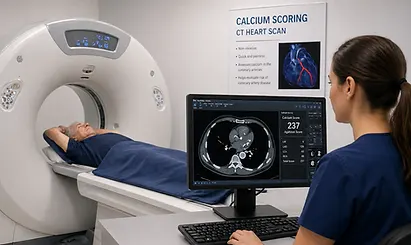
A Coronary Artery Calcium (CAC) scan, commonly known as calcium scoring, is a specialised CT scan that measures the amount of calcium buildup in the coronary arteries — the blood vessels that supply the heart with oxygen-rich blood.
Calcium in the arteries can be an early sign of coronary artery disease (CAD). The scan produces a calcium score, which helps doctors assess your risk of heart disease and guide decisions about prevention or treatment.
Calcium scoring is a non-invasive, fast, and low-radiation scan that can detect early signs of heart disease before symptoms appear.
What is a calcium scoring scan
A Coronary Artery Calcium Scan is a specialised CT scan that detects calcium deposits in the coronary arteries.
These deposits form when plaque builds up in the artery walls, which can narrow the arteries and increase the risk of heart attack or other cardiovascular problems.
The scan generates a calcium score, which indicates the amount of calcified plaque present.
Generally:
-
Score 0 – No detectable calcium, very low risk of coronary artery disease
-
Score 1–100 – Mild plaque, low to moderate risk
-
Score 101–400 – Moderate plaque, higher risk
-
Score 400+ – Significant plaque, higher likelihood of coronary artery disease
Your doctor will interpret your results alongside other risk factors such as age, family history, cholesterol levels, and lifestyle.
Why might I need a calcium scoring scan?
Your doctor may recommend calcium scoring to:
-
Assess risk of heart disease
-
Detect early coronary artery disease
-
Evaluate chest pain or cardiac symptoms
-
Guide decisions about cholesterol medication or preventative treatment
-
Monitor cardiovascular risk in patients with family history of heart disease
-
Help determine the need for further cardiac testing
The scan is particularly useful for people who have intermediate risk factors but no symptoms.
How long does a calcium scoring scan take?
Calcium scoring is a quick and simple test.
-
Scan time: approximately 5–10 minutes
-
Total appointment time: around 10–15 minutes
No injections or contrast dye are required.
What should I expect during the scan?
The procedure is non-invasive and painless.
During the scan:
-
You will lie on a CT scanner table.
-
Small electrodes may be placed on your chest to monitor your heart rhythm.
-
The CT scanner will take images of your heart while you briefly hold your breath for a few seconds.
-
The scanner captures detailed images of your coronary arteries.
You will be able to return to normal activities immediately after the scan.
Do I need to prepare for the scan?
Preparation is usually minimal.
You may be asked to:
-
Avoid caffeine or smoking for several hours before the scan
-
Wear comfortable clothing
-
Remove metal objects such as jewellery
Your clinic will provide specific instructions if preparation is required.
Is the scan safe?
Yes. Calcium scoring uses low-dose CT imaging to assess the coronary arteries.
The radiation exposure is relatively low and the scan is widely used as a preventative cardiovascular screening tool when recommended by your doctor.
If you are pregnant or think you may be pregnant, please inform the radiographer before your appointment.
When will my doctor receive the results?
After your scan:
-
Your images are reviewed by a radiologist
-
A calcium score and report are sent to your referring doctor
-
Your doctor will discuss the results and whether any preventative treatment or lifestyle changes are recommended
Is a calcium scoring scan bulk-billed?
There is an out of pocket cost, as there is no Medicare rebate for this scan. Patients will need to contact their nearest clinic for the price.
More in Diagnostic Radiology
View all diagnostic radiology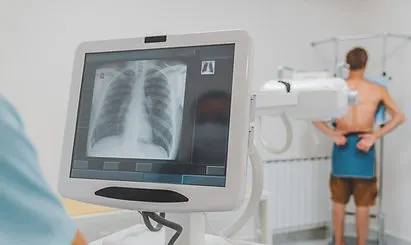
X-ray
At United Radiology, we offer high-resolution digital X-rays to assist in diagnosing a wide range of conditions. Whether you're dealing with an injury, ongoing pain, or require routine imaging, our experienced team delivers fast, bulk billed results using advanced low-dose equipment.
Learn more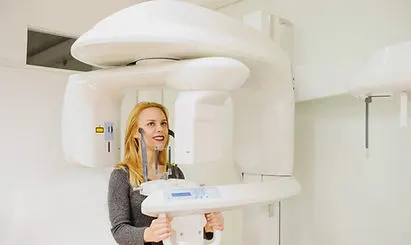
OPG
An Orthopantomogram (OPG) scan is a specialised dental X-ray that provides a panoramic image of your teeth, jaw, and surrounding structures in a single scan.
Learn more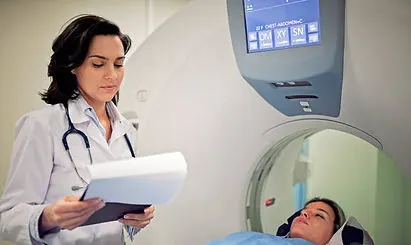
CT scan
At United Radiology, we offer low-dose, high-resolution CT scans to provide detailed cross-sectional images of your body. Also known as computed tomography, CT is commonly used to diagnose internal injuries, detect abnormalities, and guide treatment with precision. Our scans are fast, non-invasive, and bulk billed with a valid referral, ensuring timely and accessible care for all patients.
Learn more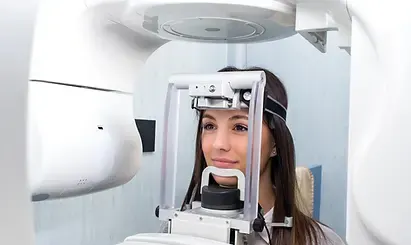
Cone Beam CT (CBCT)
At United Radiology, we provide advanced Cone Beam CT (CBCT) imaging using state of the art technology and experienced radiology specialists. CBCT is a highly detailed, three dimensional imaging technique designed to support precise diagnosis and confident treatment planning. Whether for dental implants, orthodontic assessment or surgical planning, our team delivers accurate results in a calm and professional environment.
Learn moreBook your imaging appointment
Schedule quickly online, or contact our team if you need a hand. A valid referral is required.